Tissue healing is never a simple process.This is not a linear reaction of the body and not an automatic scenario that always ends with recovery.Healing is based on a complex system of interactions between cells, immune signals, and the extracellular matrix.
Inflammation plays a key role in this process.Moreover, not only acute, pronounced inflammation but also a more subtle condition microinflammation, which can persist for a long time and imperceptibly disrupt regeneration.
The Inflammatory Phase as a Decision Point

The healing process is traditionally divided into three phases: inflammation, proliferation and remodelling.
These phases are not isolated and partially overlap each other, forming a dynamic system.
Inflammation begins immediately after tissue damage. Its task is to protect the body, remove damaged structures and prepare the microenvironment for recovery.
However, it is at this stage that the future of the wound is formed.
If the inflammatory response is excessive or poorly controlled, the tissue does not proceed to repair. She gets stuck in a state of chronic activation of the immune system. This results in delayed healing and a tendency to pathological changes.
Immune Microenvironment of Damaged Tissue
A special immune microenvironment is formed in the area of damage.
It includes inflammatory cells, non-inflammatory cells, and the extracellular matrix.
Their interaction determines the speed and quality of healing.
The Role of Inflammatory Cells
Neutrophils are the first to enter the lesion site. They provide phagocytosis of microorganisms and release reactive oxygen species.
These molecules are involved in signaling cascades that stimulate cell migration and proliferation.
But this system has a limit.Excessive amounts of reactive oxygen species increase oxidative stress and damage tissues.
48-96 hours after injury, monocytes turn into macrophages. It is macrophages that become the central regulators of the inflammatory microenvironment. They participate in all phases of healing, changing their functions depending on local signals.
If the transition of macrophages from an inflammatory state to a restorative one is disrupted, inflammation persists.
This condition is directly related to wound chronisation and extracellular matrix degradation.
Non-Inflammatory Cells as Active Participants in Immune Regulation
Keratinocytes, fibroblasts, and endothelial cells have long been considered secondary participants in the process.
Today, this idea is outdated.
These cells actively synthesise cytokines and chemokines.
They regulate the migration of immune cells and support the inflammatory microenvironment.
Fibroblasts, in addition to collagen synthesis, are able to support chronic inflammation.
When activated excessively, they enhance the degradation of the matrix and inhibit tissue repair.
In such conditions, proliferation and remodelling become ineffective.
Extracellular Matrix as a Regulator of Inflammation
The extracellular matrix is not a passive scaffold.
It is actively involved in signal transmission, mechanical regulation, and immune responses.
In the early healing phase, a temporary matrix is formed.
It consists of fibrin, fibronectin and hyaluronic acid.
These components create conditions for cell adhesion and directed migration.
As the matrix is being restored, it is constantly being rebuilt.If this process is disrupted, the inflammation is maintained longer than necessary.
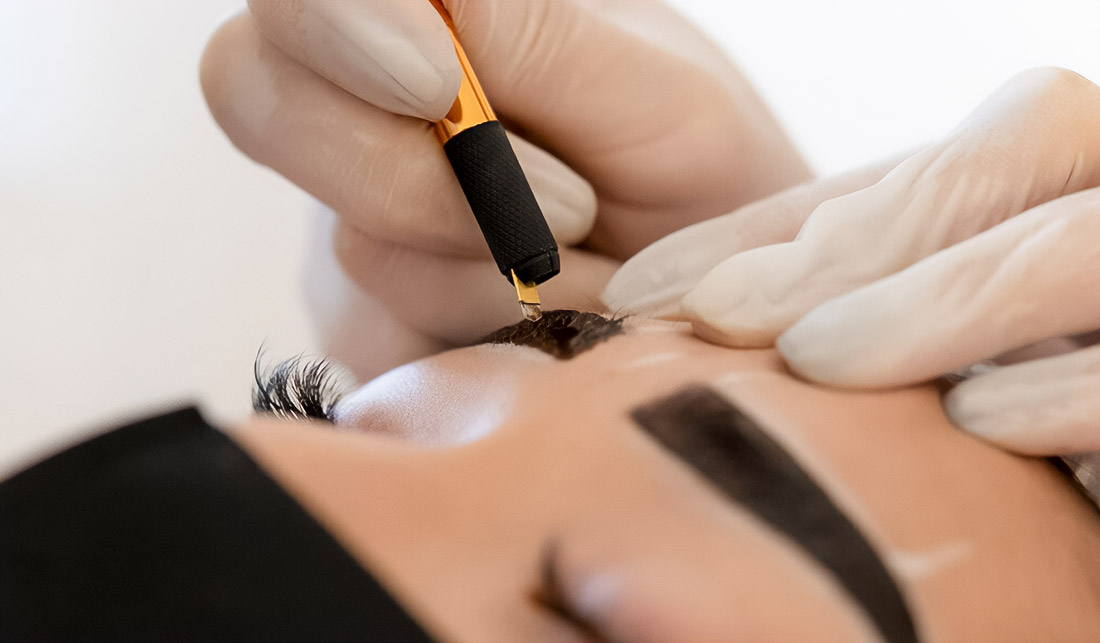
Studies show that increased stiffness of the matrix enhances the inflammatory response.It is associated with excessive scarring and a decrease in the regenerative potential of the tissue.A softer matrix environment, on the contrary, promotes physiological recovery.This logic is relevant in many contexts, including semi permanent makeup, where controlled tissue injury and predictable healing are essential for achieving stable and aesthetically balanced results.
Physico-Chemical Conditions and Microinflammation
Healing is sensitive to local conditions.A moist environment facilitates cell migration and accelerates re-epithelialisation. The wound temperature usually reaches its maximum around the third day after injury.
Hypoxia and decreased perfusion slow down recovery.
They disrupt phagocytosis and increase the inflammatory imbalance.
pH changes also affect the activity of neutrophils and macrophages.
Even small deviations from physiological conditions can support microinflammation.
This is why healing may look “normal” but actually remain incomplete.This logic is relevant in many contexts, including facial rejuvenation treatment.
Microinflammation as the Basis of Chronic Disorders

Chronic wounds are characterised by the prolonged presence of inflammatory cells.
A high concentration of cytokines and proteases remains in the tissues.
The extracellular matrix is destroyed faster than it has time to recover.
Under such conditions, fibroblasts lose their ability to effectively synthesise collagen.
Cell proliferation slows down.The remodelling of the fabric remains incomplete.
Microinflammation is becoming a key factor in pathology.It is not pronounced enough to complete the cleaning of the tissue.But active enough to constantly interfere with regeneration.
Effective healing is impossible without precise immune regulation.Inflammatory cells, non-inflammatory cells, and the extracellular matrix must work in concert.
A violation of this balance leads to chronic inflammation and delayed recovery.
Understanding the mechanisms of microinflammation is changing the approach to healing.It’s not about suppressing the immune response.It’s about restoring the balance between inflammation and regeneration.
Basketball fan, father of 3, music blogger, Mad Men fan and storyteller. Producing at the crossroads of simplicity and intellectual purity to craft an inspiring, compelling and authentic brand narrative.